
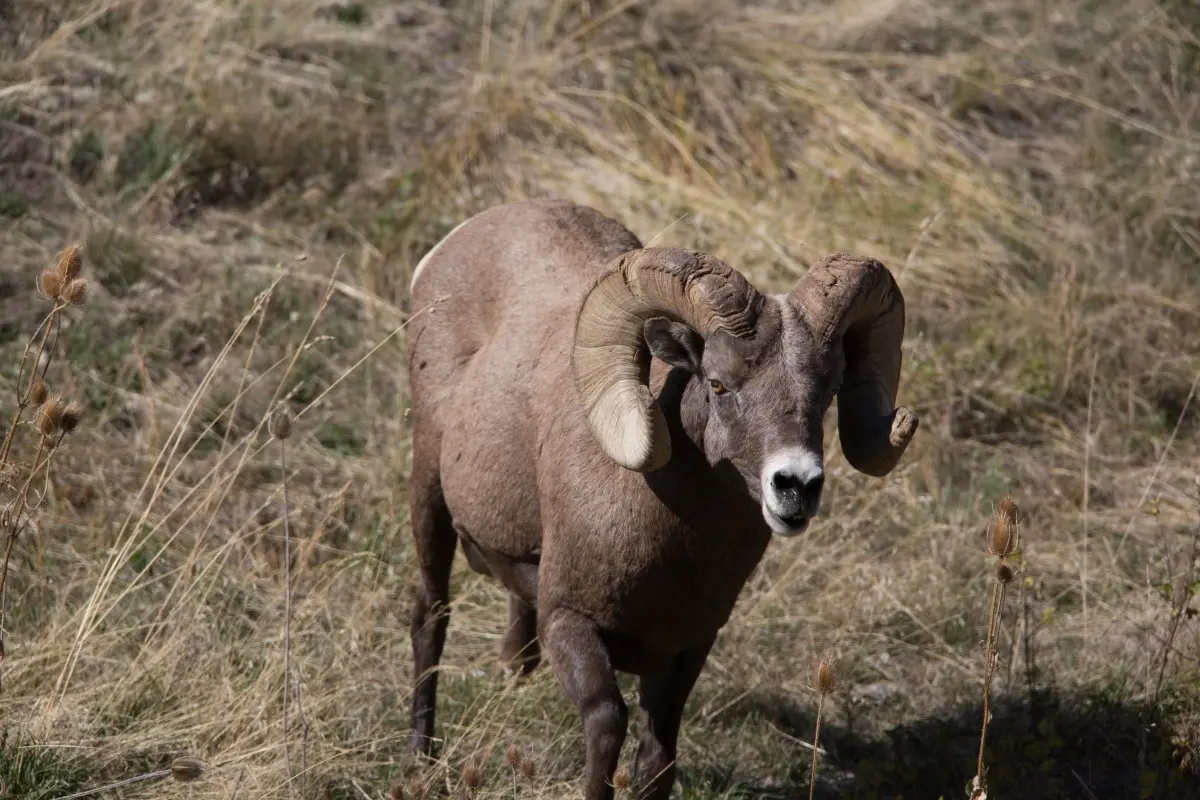
You can spend a lot of time looking for wildlife in Colorado.
Along one stretch of the Arkansas River, the clue is right in the name.
Bighorn Sheep Canyon begins downstream of Salida and follows the Arkansas River east toward the Royal Gorge region. Highway 50 and the river share this narrow corridor, where steep granite slopes, rocky ledges, pinyon-juniper country, and reliable access to water create excellent Rocky Mountain bighorn sheep habitat.
Colorado Parks and Wildlife says bighorn sheep live year-round in the Arkansas River Valley, and the Bureau of Land Management specifically identifies the canyon’s steep, rocky terrain as an excellent place to see them.
You still need some luck. These are wild animals, not roadside attractions. But if seeing a bighorn is on your Colorado list, this is one of the better places along the Arkansas River to keep your eyes on the cliffs.
Why Are There So Many Bighorn Sheep Along the Arkansas?
Rocky Mountain bighorn sheep are built for country that looks nearly impossible to walk across.
Their natural habitat includes steep cliffs, rocky slopes, and rugged terrain where they can escape predators. The Arkansas River corridor provides plenty of it.
A Bureau of Land Management study of the river corridor describes the local bighorn population as unusually connected to the Arkansas River itself. Instead of simply visiting the river occasionally, sheep in this area use the corridor for water, forage, hiding cover, feeding, lambing, and movement through the canyon.
BLM identifies three herds associated with the broader corridor: the Grape, Browns Canyon, and Fernleaf herds.
That helps explain why you can encounter bighorns in more than one part of Arkansas River country. They are not confined to the canyon bearing their name.
Start With Bighorn Sheep Canyon
If your main goal is wildlife watching, the stretch of Highway 50 between Salida and Parkdale is the obvious place to start.
Just below Salida, the Arkansas enters Bighorn Sheep Canyon. Colorado Parks and Wildlife describes this section as a granite canyon dotted with pinyon pine, juniper, and oak brush.
The highway stays close to the river for much of the drive, which gives passengers repeated opportunities to scan the rocky slopes.
Look above the road as well as beside the river.
Bighorns can blend remarkably well into tan and gray rock. Sometimes the first thing you notice is not an entire sheep but the curve of a ram’s horns, a white rump, or movement on a ledge that initially looked empty.
Because Highway 50 is an active highway with limited shoulders, wildlife watching should be done from established recreation areas and safe pullouts, not by stopping in the travel lane or on a blind corner.
For more ideas along this stretch, explore the Arkansas River corridor guide.
Five Points Is the Easiest Dedicated Wildlife Stop
One of the best places to actually get out of the vehicle is Five Points in Bighorn Sheep Canyon.
The Bureau of Land Management specifically recommends the Five Points Watchable Wildlife Area for wildlife viewing. The recreation site includes a wildlife exhibit and an observation area overlooking the Arkansas River.
That makes it a much better strategy than slowly cruising Highway 50 while trying to look up at cliffs.
Park, get out the binoculars, and spend some time looking across the river and along the canyon walls.
Even if the sheep do not cooperate, Five Points is a pleasant Arkansas River stop. The area also provides river access, picnicking, and camping.
Wildlife watching is rarely improved by rushing.
Keep Looking Between Vallie Bridge and Parkdale
Do not assume your chances end at Five Points.
Colorado Parks and Wildlife describes the river below Vallie Bridge as particularly rich in wildlife, specifically noting bighorn sheep and deer drinking along the riverbanks while birds soar overhead.
The Vallie Bridge-to-Parkdale corridor contains numerous Arkansas Headwaters Recreation Area access sites, making it possible to stop safely rather than trying to watch wildlife from a moving vehicle.
This is also a good section to combine wildlife watching with other activities. The river is popular for rafting and fishing, while recreation sites provide places to picnic or simply sit beside the water.
If you are exploring this part of the valley, our Arkansas River fishing guide and camping guide can help turn a wildlife stop into a full day.
Browns Canyon Has Bighorn Sheep Too
Bighorn Sheep Canyon gets the name, but it does not have a monopoly on the animals.
Browns Canyon National Monument, between Buena Vista and Salida, supports an important bighorn sheep herd along with elk, mule deer, black bear, mountain lions, bobcats, foxes, coyotes, and numerous raptors.
BLM identifies the monument as significant year-round bighorn range and lambing habitat.
The ruggedness that makes Browns Canyon famous for whitewater also makes it excellent wildlife country. Much of the river corridor remains relatively undeveloped, with steep granite formations rising directly from the Arkansas.
One of the more interesting ways to look for wildlife here is from the river itself.
On a Browns Canyon rafting trip, you are traveling through habitat that is difficult to see from roads. Between rapids, watch the slopes and rock formations rather than staring only at the water.
Hikers can also explore the monument from recreation areas such as Ruby Mountain and Hecla Junction. Check the BLM Browns Canyon National Monument information before heading out.
Do Not Forget to Look Up
Bighorn sheep may get top billing, but they are only part of the wildlife story.
Colorado Parks and Wildlife lists mule deer, pronghorn, and bighorn sheep as year-round residents of the broader Arkansas River Valley, while elk and moose may be seen seasonally.
The river corridor is also excellent bird habitat.
Peregrine falcons, golden eagles, bald eagles, blue herons, turkey vultures, ducks, geese, mergansers, and American dippers are among the birds found along the Arkansas.
Browns Canyon’s cliffs provide habitat for peregrine falcons, prairie falcons, and golden eagles.
So while everyone else in the vehicle is scanning the rocks for horns, occasionally look at the sky.
How to Watch Bighorn Sheep Without Bothering Them
The best wildlife encounter is one where the animal barely cares that you are there.
Colorado Parks and Wildlife recommends using an animal’s behavior as your guide. If wildlife becomes alert, stops feeding, changes direction, or moves away because of you, you are too close or staying too long.
Move slowly and avoid approaching animals directly.
Binoculars are far better than trying to close the distance for a phone photo.
Dogs deserve special consideration too. CPW recommends leaving pets at home for the best wildlife-viewing experience because dogs can chase wildlife, cause animals to flee, or put both the dog and wildlife at risk.
If your dog is with you, keep it leashed and under control. Arkansas Headwaters Recreation Area requires dogs to be leashed and controlled.
Never feed wildlife.
A bighorn beside the road may look comfortable around people, but that does not make it tame.
What Time of Day Is Best?
Bighorn sheep are primarily active during daylight, so you do not need to be standing in the canyon before sunrise to have a chance of seeing them.
Still, mornings and later afternoons are usually more comfortable for people during late summer, and spending quieter time at a wildlife-viewing site is generally more productive than arriving, looking for two minutes, and leaving.
Light also tends to be better for scanning canyon walls when the sun is lower.
There is no guaranteed hour.
The better strategy is to slow down, use binoculars, and spend enough time looking that your eyes begin separating sheep-colored animals from sheep-colored rocks.
What Happens During the Bighorn Rut?
Later in the year, bighorn behavior changes.
Adult rams normally spend much of the year separated from ewe groups. During the breeding season, or rut, they come together and compete for dominance.
This is when the famous horn clashes can occur.
It is impressive to witness, but it is not an invitation to move closer.
Rams are powerful wild animals. Give them room and watch with binoculars or a telephoto lens.
If you are curious about the species itself, Colorado Parks and Wildlife has an excellent Rocky Mountain bighorn sheep guide covering their biology and conservation.
A Simple Bighorn Sheep Canyon Road Trip
You can make wildlife watching part of a much bigger day without turning it into a complicated itinerary.
Start in Salida
Have breakfast or coffee in town, walk along the Arkansas River, then head east on Highway 50.
If you have not explored town before, use our Salida guide to plan the rest of your visit.
Drive Through Bighorn Sheep Canyon
Keep an eye on the rocky slopes as the valley narrows.
Passengers will have a much easier time spotting wildlife than the driver. The driver’s job is the road.
Stop at Five Points
Spend some actual time at the Watchable Wildlife Area rather than treating it as a five-minute roadside stop.
Bring binoculars, water, and maybe lunch.
Continue Toward Parkdale
Keep exploring downstream through the canyon. The Vallie Bridge-to-Parkdale section offers additional recreation sites and more opportunities to watch the river and surrounding slopes.
From Parkdale, you can continue toward the Royal Gorge and Cañon City or turn around and see the canyon again from the opposite direction.
The return trip is not redundant. Different light and viewing angles can make wildlife much easier to spot.
Late Summer Is a Good Time to Slow Down
By the second half of August, the Arkansas River Valley begins changing pace.
Summer is not over, but the frantic peak-season feeling starts easing. The river is different from June, mornings begin feeling cooler, and road trips, fishing, wildlife watching, hiking, and exploring river-access sites become increasingly appealing ways to spend a day.
Bighorn Sheep Canyon is especially good for this kind of trip because there does not need to be a single destination.
Drive the canyon.
Stop beside the river.
Look at the cliffs.
Have a picnic.
Fish for a while.
Continue toward the Royal Gorge.
And keep the binoculars somewhere you can actually reach them.
The Sheep Are Only Part of the Canyon
Seeing a Rocky Mountain bighorn is memorable, but the search itself is part of what makes this stretch of the Arkansas worth exploring.
You begin noticing things you might otherwise drive past.
A golden eagle circling above a ridge.
A deer stepping down toward the river.
The way the Arkansas has cut a path through steep rock.
The transition from the broad Salida Valley into the tighter canyon country downstream.
And eventually, if you are lucky, a shape on the rocks moves.
Then another.
And suddenly the cliff you have been staring at has sheep all over it.
Frequently Asked Questions
Where is the best place to see bighorn sheep along the Arkansas River?
Bighorn Sheep Canyon between Salida and Parkdale is one of the best areas to look. The Bureau of Land Management specifically recommends the Five Points Watchable Wildlife Area, and Colorado Parks and Wildlife notes that bighorn sheep are regularly found along the river corridor below Vallie Bridge.
Are bighorn sheep only found in Bighorn Sheep Canyon?
No. Browns Canyon National Monument also supports important bighorn sheep habitat, and bighorns occur elsewhere along the Arkansas River corridor.
Are bighorn sheep dangerous?
They are wild animals and should be treated accordingly. Do not approach, feed, surround, or attempt to pose near them. Give them enough room that your presence does not change their behavior.
Can I bring my dog while looking for wildlife?
Colorado Parks and Wildlife recommends leaving pets at home for the best wildlife-viewing experience. If a dog is with you in Arkansas Headwaters Recreation Area, keep it leashed and under control.
Do I need binoculars?
You can certainly see bighorn sheep without them, but binoculars make wildlife watching much better. Sheep often blend into canyon walls surprisingly well, and binoculars allow you to observe them without getting closer.
Explore More of the Arkansas River
Bighorn Sheep Canyon is only one part of a river corridor that changes dramatically between Leadville and Cañon City.
Use Arkansas River Guide to explore Browns Canyon, Salida, rafting, fishing, camping, hiking, scenic drives, river towns, and the public lands surrounding Colorado’s Arkansas River.