
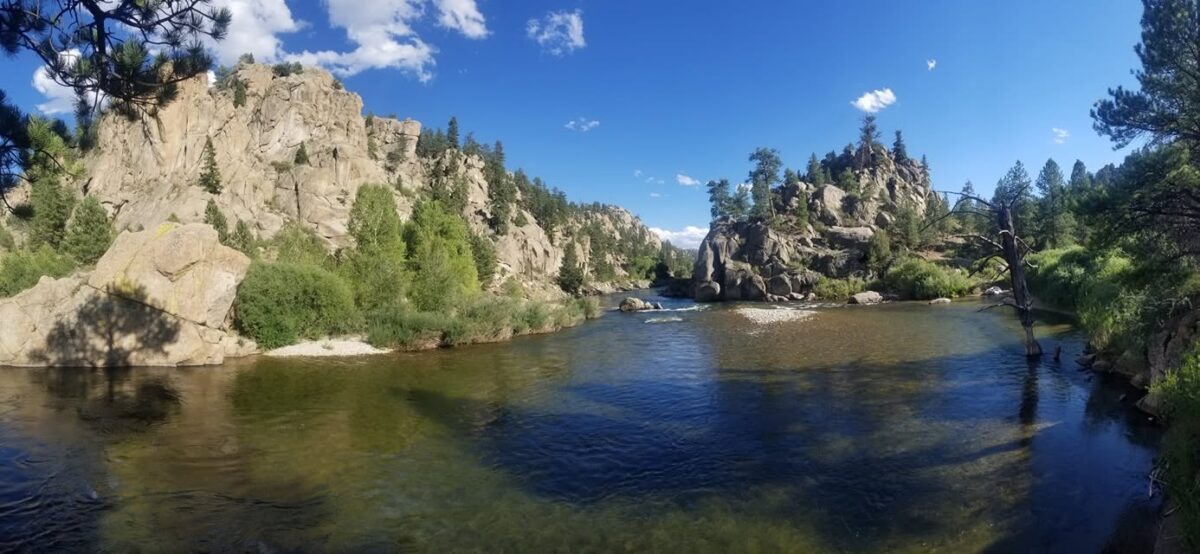
September changes the Arkansas River.
Summer crowds begin thinning out. Mornings get colder. The river generally settles into its lower-water season, and fishing becomes a bigger part of the picture as the main whitewater season winds down.
Colorado Parks and Wildlife specifically notes that fishing on the Arkansas improves when flows are lower and the water is clear. The river is also an unusually strong wild trout fishery. About 90 percent of its trout population is made up of self-reproducing brown trout, with Colorado River rainbow trout making up most of the remainder.
That makes fall a great time to fish.
It also makes it an important time to pay attention to where you put your feet.
Brown trout spawn in the fall. As September progresses into October, anglers may begin encountering spawning fish and the patches of cleaned gravel called redds where trout deposit their eggs.
You do not need to stop fishing the Arkansas when this happens. You just need to know what you are looking at and give spawning fish a little room.
Why Fall Is So Good on the Arkansas
The Arkansas is a very different river in September and October than it is during June runoff.
Lower flows expose structure that was hidden earlier in summer. Riffles, seams, pocket water, gravel bars, deeper runs, and banks become easier to read. Wading can also become more manageable in appropriate locations, although the Arkansas remains a powerful river and seemingly calm water can still have surprisingly strong current.
The change is especially noticeable downstream from Salida.
Colorado Parks and Wildlife describes the Salida-to-Vallie Bridge section through Bighorn Sheep Canyon as some of the best walk-and-wade and float fishing in the Arkansas Headwaters Recreation Area. The canyon contains deep pools, rocky banks, and gravel bars, with numerous public river-access sites along Highway 50.
Upstream, the Buena Vista-to-Salida corridor offers another style of fishing. Below Browns Canyon, the valley widens and the river calms, with public lands and CPW fishing easements providing access in selected locations.
Farther north toward Leadville, the river becomes smaller and colder, and the landscape changes again.
That variety is one reason the Arkansas is such a good fishing river. If one section does not suit what you want to do, there are many more miles to explore.
Start with our Arkansas River fishing guide and check current Arkansas River flows before choosing where to go.
More Than 100 Miles of Gold Medal Trout Water
The quality of the Arkansas fishery is not just local bragging.
Colorado Parks and Wildlife has designated more than 100 miles of the Arkansas River, from the Lake Fork confluence downstream to Parkdale, as Gold Medal trout water.
That stretch crosses a remarkable amount of country.
It begins high in the Upper Arkansas Valley, passes through the Leadville and Buena Vista areas, runs through Browns Canyon and Salida, then continues down through Bighorn Sheep Canyon toward Parkdale.
Colorado Parks and Wildlife describes the Arkansas within the Arkansas Headwaters Recreation Area as a world-class fishery for brown and rainbow trout.
Most importantly for fall anglers, those brown trout are largely reproducing naturally.
The fish you see in the river are not simply being replaced by truckloads of hatchery trout every year. The health of the spawning population matters directly to the future of the fishery.
Brown Trout Spawn in the Fall
Brown trout are not native to Colorado. They were introduced to the state in the late 1800s and have since become one of Colorado’s most widespread and popular game fish.
They have also become exceptionally well established in the Arkansas.
Colorado Parks and Wildlife says brown trout spawn during the fall, with females moving into shallow gravel areas and creating nests in the river bottom.
Those nests are called redds.
A female creates a redd by using her tail to move sediment and small material from an area of gravel. Eggs are deposited into the gravel and fertilized by a male.
Once you know what a redd looks like, you may be surprised by how visible one can be.
How to Recognize a Trout Redd
Imagine looking across a shallow section of river where the bottom is mostly brown, tan, or dark gray.
Then you notice one patch of gravel that looks strangely clean.
That is what should get your attention.
Redds often appear as lighter-colored areas of recently disturbed gravel. The surrounding riverbed may be covered with algae, sediment, or darker material, while the gravel within the redd looks freshly cleaned.
They are commonly found in relatively shallow gravel areas with moving water.
You may see a pair of brown trout holding over the spot.
Or you may see no fish at all.
An empty redd does not mean it is safe to walk across. Eggs may already be buried beneath the gravel.
If a patch of river bottom looks suspiciously clean during spawning season, the easiest solution is simply to go around it.
Do Not Walk Through the Redds
This is probably the most important thing a fall angler can do.
Do not wade across a trout redd.
Trout eggs develop within the gravel, and walking across a spawning area can disturb or damage them. Even after the adult fish have moved away, the next generation may still be beneath your boots.
The Arkansas can make this slightly tricky because low fall water encourages anglers to wade places that were inaccessible earlier in summer.
Before stepping into a shallow gravel bar, stop on the bank and look at the bottom.
If you see noticeably clean patches of gravel, give them plenty of room.
Sometimes the best route is simply to get out of the river, walk along the bank where access allows, and enter again downstream.
Leave Actively Spawning Fish Alone
Fall brown trout can become more visible than usual.
That does not mean every visible trout is an easy fishing opportunity.
If two fish are paired together over a clean patch of shallow gravel and seem unusually committed to staying in that spot, they may be spawning.
Leave them alone.
There is plenty of river left to fish.
Colorado Parks and Wildlife has emphasized avoiding disturbance of spawning brown trout and their redds. This is particularly important on a river like the Arkansas where natural reproduction supports most of the brown trout population.
You can still fish the deeper runs, pockets, seams, riffles, banks, and other normal holding water.
The point is not to stop fishing during the spawn.
It is to avoid turning the spawn itself into the fishing opportunity.
The Best Fall Fishing Is Not Necessarily on a Redd Anyway
One of the nice things about the Arkansas is that you do not have to stand over spawning gravel to find fish.
Brown trout are distributed throughout the river.
Look for the same kinds of water that hold trout during the rest of the year: current seams, deeper pockets behind rocks, undercut banks, riffles dropping into deeper runs, and slower water adjacent to faster current.
Fall can also bring changing insect activity, shorter days, colder nights, and rapidly changing water temperatures.
What worked last week may not work today.
That is part of fishing.
If you are new to the river, spend more time watching the water and less time worrying about having exactly the right fly.
Where to Fish the Arkansas in Fall
There is no single best fall section. Different parts of the river offer very different experiences.
Leadville to Buena Vista
The upper river is smaller and increasingly high-elevation as you travel north.
Colorado Parks and Wildlife lists numerous fishing and river-access sites between Leadville and Buena Vista, including Hayden Meadows, Kobe, Railroad Bridge, and several sites around the Numbers corridor.
Hayden Meadows is particularly approachable for visitors who want to explore the upper river. The recreation area includes fishing access, trails, wetland boardwalks, and wildlife-viewing opportunities.
Remember that fall arrives early at this elevation. Cold mornings, frost, and even early snow are possible while conditions farther downstream remain mild.
Buena Vista to Salida
This section includes Browns Canyon, but the character of the river changes considerably along the way.
Below Browns Canyon, the valley opens and fishing becomes increasingly prominent. Colorado Parks and Wildlife notes that CPW fishing easements provide public angling access across portions of otherwise private land.
Those easements are important, but they do not make the surrounding private property public.
Stay within posted access boundaries and use established river-access sites.
If you are making a longer trip, combine a fishing day with our Buena Vista guide, Arkansas River camping guide, or a visit to the area’s hot springs.
Salida to Bighorn Sheep Canyon
This may be the easiest section for a visiting fall angler to explore.
The river runs directly through Salida before entering Bighorn Sheep Canyon along Highway 50.
Colorado Parks and Wildlife describes this stretch as having deep pools, rocky banks, gravel bars, and some of the best walk-and-wade and float fishing within the recreation area.
Numerous public access points make it possible to move around without guessing where you are allowed to be.
It is also spectacular country.
Bring binoculars. Bighorn sheep live in the canyon year-round, and fall fishing is a good excuse to spend enough time beside the river to actually notice wildlife.
Our Salida guide is a good starting point if you want to turn a fishing day into a longer stay.
Vallie Bridge to Parkdale
The canyon continues downstream through a long stretch with numerous river-access sites.
Colorado Parks and Wildlife lists 20 access sites along the 29-mile Vallie Bridge-to-Parkdale section, with developed campgrounds at Vallie Bridge and Five Points and dispersed camping at selected recreation sites.
This is good country for anglers who like exploring.
It is also where paying attention to property boundaries becomes increasingly important. Public land, recreation sites, fishing access, and private property are mixed throughout the corridor.
Low Water Does Not Mean Harmless Water
Fall flows can make the Arkansas look much friendlier than it did during runoff.
Do not confuse lower water with no risk.
Colorado Parks and Wildlife specifically warns that even portions of the Arkansas that appear calm can contain strong current.
Cold water adds another concern as nights become colder.
Use a wading belt. Move deliberately. Avoid wading deeper simply because the river looks manageable. If you are uncertain about a crossing, do not make it.
There is almost always another piece of fishable water nearby.
Check the Rules for the Exact Place You Are Fishing
The Arkansas passes through public land, fishing easements, recreation sites, and private property.
Fishing regulations can also vary by location.
Do not rely on something you heard from another angler several years ago.
Check the current Colorado Parks and Wildlife fishing information and current regulations before your trip.
Colorado anglers age 16 and older generally need a valid fishing license, while youth age 15 and under can fish without one under current statewide rules.
For river access, the Arkansas Headwaters Recreation Area is one of the most useful planning resources.
When in doubt about access, assume private property is private.
Clean Your Gear When You Move Between Waters
Fall fishing often involves moving around.
You might fish the Arkansas one day, a tributary the next, then stop at another stream on the drive home.
That makes cleaning fishing gear especially important.
Colorado Parks and Wildlife encourages anglers to clean, drain, and dry boots, waders, and fishing equipment to reduce the spread of aquatic nuisance species.
The Arkansas Headwaters Recreation Area even provides a small self-decontamination station at Vallie Bridge for boots, fishing equipment, and hand-launched watercraft.
It only takes a few minutes.
A good rule is simple: if your gear was wet in one body of water, clean it before putting it into another.
A Simple Fall Fishing Day From Salida
You do not need a complicated itinerary.
Start Early
Begin around Salida or one of the public access areas downstream while the canyon is still cool.
Fish normal holding water and take a moment to look for clean gravel before wading into shallow areas.
Move Downstream
Follow Highway 50 into Bighorn Sheep Canyon and stop at established Arkansas Headwaters Recreation Area sites.
If one area is busy, keep going.
There is a lot of river.
Take a Long Lunch
Fall fishing does not need to be an endurance event.
Have lunch beside the river at an appropriate recreation site, watch the cliffs for bighorn sheep, and let the day warm up.
Fish Again Later
Colorado Parks and Wildlife notes that fishing on the Arkansas is often best early and late in the day.
Spend the afternoon exploring, then return to the river for another session before evening temperatures drop.
What to Bring for Fall Fishing
- A valid Colorado fishing license if required
- Waders or appropriate cold-water footwear
- A wading belt
- Warm layers for cold mornings
- A rain shell
- Polarized sunglasses, which also make redds easier to see
- Water and sun protection
- Binoculars for wildlife
- An offline map showing public and private land
- A thermometer if you like keeping track of changing water conditions
And bring a little patience.
Fall is a good time to stop treating the Arkansas like something you need to race through.
Frequently Asked Questions
Is fall a good time to fish the Arkansas River?
Yes. Colorado Parks and Wildlife notes that fishing improves as flows become lower and the water clears, and fishing use increases as the main high-water boating season ends. Conditions vary by year and river section, so check current flows before choosing where to fish.
When do brown trout spawn in Colorado?
Brown trout spawn in the fall. Colorado Parks and Wildlife has described September and October as spawning months, although exact timing varies with location and conditions.
What is a trout redd?
A redd is a spawning nest created in gravel. A female trout moves sediment from an area of the riverbed before depositing eggs. Redds often look like unusually clean or light-colored patches of gravel compared with the surrounding bottom.
Can I fish the Arkansas during the brown trout spawn?
Yes, unless a particular location has a specific closure or regulation. The responsible approach is to fish normal holding water while avoiding actively spawning trout and staying off redds. Always check current Colorado Parks and Wildlife regulations for the exact water you plan to fish.
Why shouldn’t I walk on a redd if there are no fish there?
Because eggs may already be buried in the gravel. A redd does not stop being important when the adult trout leave it.
Where is the easiest place to try fall fishing?
For visitors, the Salida-to-Bighorn Sheep Canyon corridor is particularly approachable because Highway 50 follows the river and numerous Arkansas Headwaters Recreation Area sites provide public access. The Buena Vista and upper-river sections offer plenty of additional options.
Good Fishing Depends on More Than Catching Fish
Fall on the Arkansas is easy to like.
The mornings are cold enough for a jacket. The river is quieter. Cottonwoods begin turning yellow. Bighorn sheep blend into the canyon walls, and the frantic feeling of midsummer starts disappearing.
It is also when the brown trout that make up most of this fishery begin creating the next generation.
You do not need to stay home.
You do not need to stop fishing.
Just look before you step into the river.
If you see a clean patch of gravel, walk around it. If you see a pair of trout actively spawning, leave them alone and find another run.
There are more than 100 miles of Gold Medal water on the Arkansas.
You have options.
Plan Your Arkansas River Fishing Trip
Use Arkansas River Guide’s fishing section to explore the river, check current flows, find camping along the Arkansas, and plan a fall trip from Leadville through Buena Vista, Browns Canyon, Salida, Bighorn Sheep Canyon, and Parkdale.