
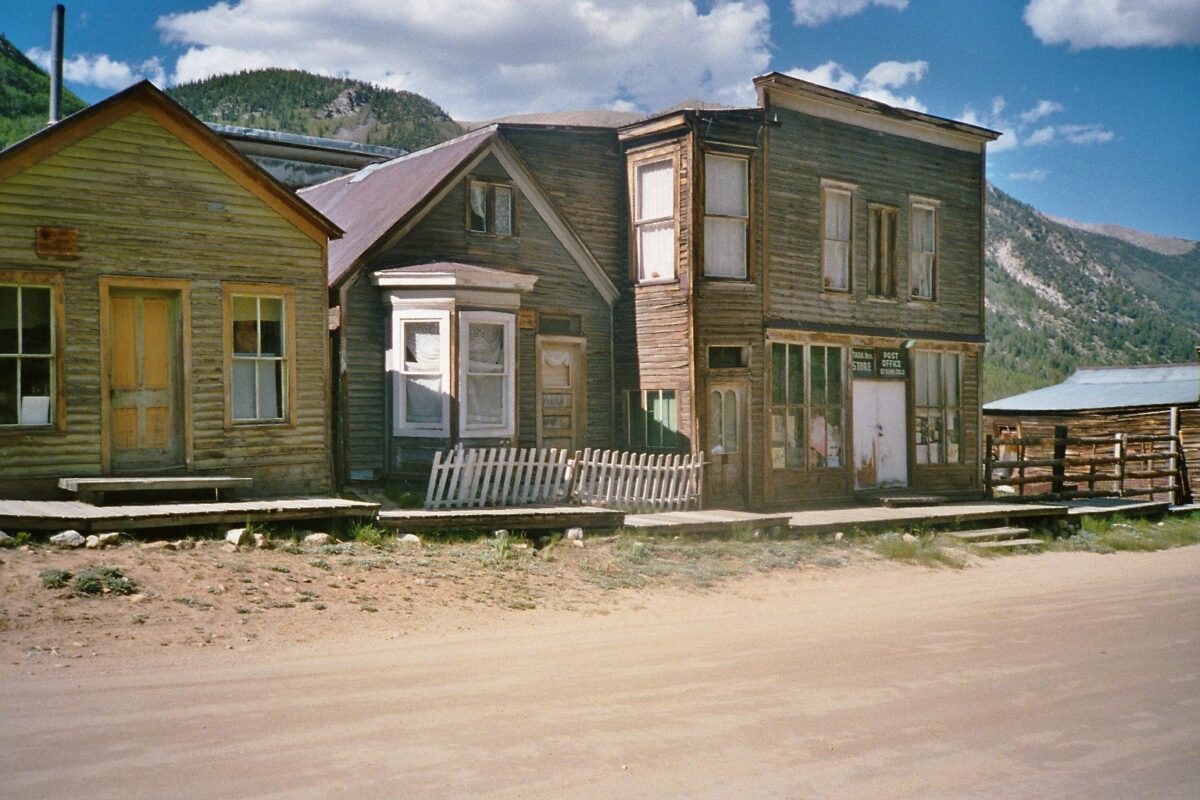
St. Elmo is one of those Colorado places that feels different as soon as the summer crowds disappear. Old wooden storefronts line the road, the mountains close in around Chalk Creek, and the history of a once-busy mining town is still visible without a museum ticket or a long hike.
But late October is not simply a quieter version of September. At nearly 10,000 feet, St. Elmo is entering winter even when Buena Vista and Salida are enjoying mild afternoons. The aspens may already be bare, the seasonal general store may be closed, and the last miles of the road can change from dry gravel to snow or ice.
That does not mean you should rule it out. It means a late-fall visit is best planned as a short, flexible historic outing, not a guaranteed leaf-peeping drive or a high-pass adventure.
Where Is St. Elmo, Colorado?
St. Elmo sits high in Chalk Creek Canyon southwest of Buena Vista, near Nathrop in Chaffee County. Colorado’s official tourism site places it about 16 miles west of Nathrop. The route follows Chaffee County Road 162 west from U.S. Highway 285, gradually climbing away from the Arkansas River Valley toward the Sawatch Range.
The lower part of the drive passes beneath Mount Princeton and the distinctive pale Chalk Cliffs. Farther up, the canyon becomes narrower and more wooded. The road transitions from pavement to gravel before reaching the historic townsite.
If you have not explored this side of the valley, our Chalk Creek Canyon guide explains the larger landscape, including trails, creek access and the historic railroad corridor.
Why Is St. Elmo a Ghost Town?
St. Elmo grew during Colorado’s mining boom in the late 1800s. Prospectors, miners, railroad workers, merchants and their families created a mountain community where the difficult terrain made everyday life a project of its own.
Mining and the railroad brought people and money into Chalk Creek Canyon. When the mines declined and rail service ended, the town’s commercial life faded. Unlike many former mining settlements that were dismantled or disappeared entirely, St. Elmo retained a remarkable collection of buildings.
That surviving streetscape is nationally recognized. The National Park Service lists the St. Elmo Historic District on the National Register of Historic Places, with a listing date of September 17, 1979.
It is important to remember that a ghost town is not necessarily an abandoned public playground. Some buildings and parcels remain privately owned or cared for. The right way to explore is from public streets and clearly permitted areas, without entering structures or taking souvenirs.
What Makes a Late-Fall Visit Different?
The town is quieter, but the fall colors are not guaranteed
Peak aspen color in the high country generally arrives before the end of October. By the last week of the month, many trees may have dropped their leaves. Rather than promising golden hillsides, expect a more subdued landscape: dark conifers, bare branches, old timber buildings and perhaps snow on nearby peaks.
For photography, that can be an advantage. The simple shapes of the historic storefronts stand out, and lower-angle autumn light can bring out the weathered wood. A cloudy day can work well too, especially when bright sun would create harsh shadows.
Seasonal services may be closed
The Colorado Tourism Office describes the St. Elmo General Store as seasonal. Do not assume you can buy food, water or supplies when you arrive in late October. Bring what you need from Nathrop, Buena Vista or Salida.
Likewise, do not count on campground facilities, restrooms or other summer services being available. Check individual facilities before planning around them.
Road conditions matter more than the calendar
County Road 162 is the main approach to St. Elmo. It is not the same as the rough four-wheel-drive routes that continue into the surrounding mountains, but it still reaches high elevation and includes an unpaved section.
Chaffee County explains that its rural roads receive different levels of maintenance, and some roads are serviced only seasonally. The county’s Road and Bridge Department is the appropriate place to ask about County Road 162 conditions and maintenance. Its listed contact number is 719-239-4581.
For the highways leading to Nathrop, check COtrip. COtrip is useful for U.S. 285 and other state-maintained roads, but it should not be treated as a definitive live-condition report for every mile of County Road 162.
This guide is not a live road-condition report. Check with the county and review the mountain forecast immediately before traveling. If the road is snowy, icy or muddy, or a storm is approaching, choose a lower-elevation outing instead.
What Should You Do Once You Arrive?
Walk the historic main street
The best activity in St. Elmo is also the simplest. Park where permitted and take time to look at the buildings from the street. Notice the storefront windows, porches, wood siding and the way the town is tucked into the valley. Imagine the work involved in delivering supplies and keeping a railroad running in this mountain environment.
You do not need to cover miles of ground to appreciate the place. A slow walk with time for photographs is enough for a satisfying stop.
Look for the old railroad story
St. Elmo’s location makes more sense when you remember the railroad. The tracks once connected the mining community with the outside world, and the old rail corridor continues into the high country beyond town. Our Chalk Creek Canyon overview describes some of the area’s railroad-related trails and historic sites.
In late fall, keep that history as a reason to look around, not an invitation to follow remote roads. Routes toward Hancock, the Alpine Tunnel and Tincup Pass are very different undertakings from visiting St. Elmo’s main street. Snow, ice and seasonal access restrictions can make those extensions unsuitable.
Photograph the town without disturbing it
Historic buildings can look invitingly empty. Resist the urge to step inside, climb on porches or move objects for a photograph. Stay out of closed structures and respect signs, fences and private property. Old buildings may be unstable, and preservation depends on visitors leaving them alone.
If you bring a dog, keep it under control and away from historic structures and private yards. Pack out everything you bring.
A Simple St. Elmo Day Trip from Buena Vista or Salida
Start in the Arkansas River Valley. Have breakfast and fill your fuel tank before leaving town. From Buena Vista or Salida, take U.S. 285 toward Nathrop and turn west onto County Road 162.
Drive up Chalk Creek Canyon. Take your time. Mount Princeton, the Chalk Cliffs and the changing vegetation make the approach part of the experience. Use safe, designated places to pull off the road, not narrow shoulders or blind curves.
Explore St. Elmo on foot. If the road is in suitable condition, spend an unhurried hour or two walking the public streets and reading the landscape. Dress for the temperature at the townsite, not the temperature in the valley.
Return before dark. In late October, daylight is short and shaded sections of mountain roads can freeze earlier than exposed pavement. An early return also leaves room to stop along the canyon or spend time in Nathrop.
Keep a backup plan. If weather or road conditions make St. Elmo a poor choice, explore the lower canyon, browse our Nathrop guide, or look at hot springs around the Arkansas River Valley instead. Verify hours and availability for any business you intend to visit.
What to Bring for a Late-Fall Visit
- Warm layers, gloves and a wind-resistant outer layer
- Sturdy shoes with traction for potentially icy or uneven surfaces
- Drinking water, snacks and any medication you may need
- A fully charged phone and an offline map
- Fuel, a spare tire and basic vehicle emergency supplies
- A flashlight or headlamp in case daylight runs short
- A camera, with enough time to enjoy the town without looking only through the lens
At this elevation, even a short visit can feel cold. Check the forecast for the mountains near St. Elmo, not just the forecast for Buena Vista.
Frequently Asked Questions
Can you visit St. Elmo in November?
Sometimes, yes. St. Elmo is known as a destination people visit beyond summer, but access depends on weather, road conditions and your vehicle. Never interpret that as a guarantee that the road is clear on a particular November day.
Is St. Elmo free to visit?
Walking the publicly accessible historic streets does not normally require an admission ticket. Some buildings and properties are private, and any operating business may have its own charges.
Do you need four-wheel drive to reach St. Elmo?
In dry, favorable conditions, the main approach is different from the technical high-country trails beyond town. In snow, ice or mud, vehicle capability and tire condition matter much more. Ask about current road conditions before deciding whether to go.
Is the St. Elmo General Store open in late October?
It is a seasonal business, so do not plan around it being open without confirming current hours directly.
Can you drive from St. Elmo over Tincup Pass?
That is a separate high-elevation off-road route, not a normal extension of the St. Elmo sightseeing drive. Late-fall snow and changing access can make it impractical or unsafe. Plan the town visit as an out-and-back unless you have independently confirmed conditions and restrictions for another route.
A Different Kind of Fall Color
St. Elmo does not need peak aspens to be worth visiting. The appeal is the rare chance to stand in a Colorado mountain town where so much of the old streetscape still exists, and to see how the landscape shaped the people who lived there.
By late fall, the quiet can make that story easier to hear. Just let the conditions set the itinerary. Check the road, bring warm clothes, respect the buildings and be willing to turn around.
For more places to explore nearby, start with our scenic drives and Chalk Creek Canyon guides, then follow the Arkansas River north toward Buena Vista or south toward Salida.