
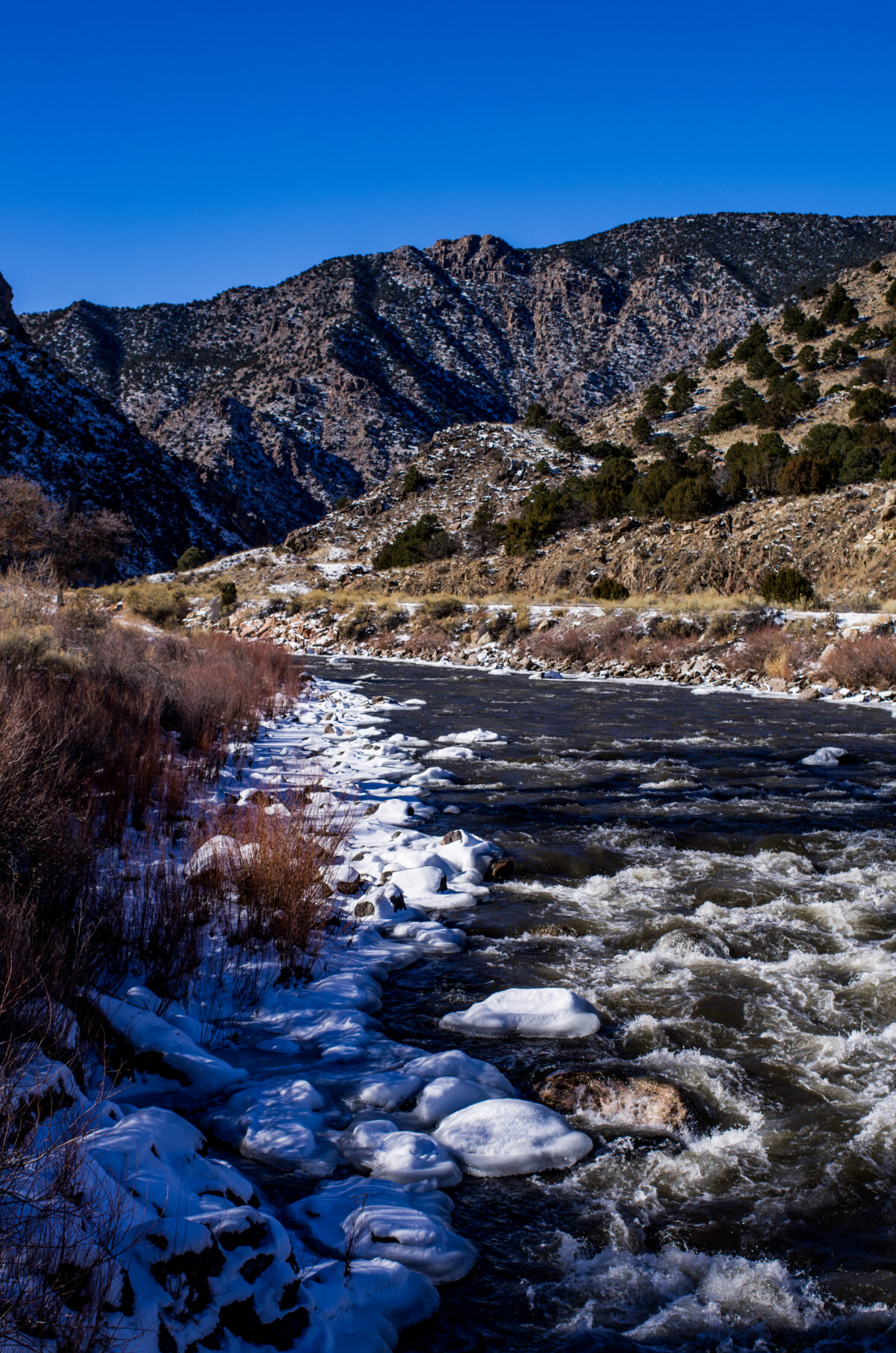
Summer gets most of the attention along the Arkansas River, but the river does not disappear when rafting season ends. In November, the campgrounds grow quieter, the cottonwoods lose their leaves, and snow begins collecting on the Sawatch Range. If you enjoy cold mornings, open views and uncrowded riverside camps, this is an entirely different way to experience the Upper Arkansas Valley.
Winter camping here is possible, but it takes more planning than a July weekend. Colorado Parks and Wildlife says the developed campgrounds in Arkansas Headwaters Recreation Area are open year-round unless severe weather prevents access. That does not mean every road will be clear, every amenity available, or every campsite comfortable.
Can You Camp Along the Arkansas River in Winter?
Yes. The Arkansas Headwaters Recreation Area (AHRA) manages a long, connected corridor of river recreation sites between the mountains and the plains. Its developed campgrounds generally remain available throughout the year, subject to severe weather and site-specific restrictions.
Unlike a typical single-location state park, AHRA stretches along highways and through several counties. Conditions can be dramatically different from one campground to another. A site near Leadville may be snow-covered while a lower-elevation campsite along U.S. 50 is dry and sunny.
For winter trips, choose the campground based on the actual forecast, road access and your equipment rather than summer photographs.
Where to Look for a Riverside Campsite
Railroad Bridge: Upper Arkansas Valley
Railroad Bridge is in the Leadville-to-Buena Vista portion of the recreation area. It puts you close to the river and the mountain scenery of the northern valley. This is a good starting point for campers who want to explore the upper river, but be ready for colder nights and potentially icy access.
See our camping guide for Buena Vista for more options around town.
Ruby Mountain and Hecla Junction: Browns Canyon Country
Ruby Mountain and Hecla Junction sit near Browns Canyon, between Buena Vista and Salida. They are appealing for photographers, hikers and people who simply want to watch the river move through granite country.
Ruby Mountain provides access toward Browns Canyon National Monument and the Fourmile trail system. Hecla Junction is a major river access point and has a short riverside trail downstream toward Seidel’s Suckhole. Trail conditions may include snow, ice and mud in the colder months.
If you plan to stay after dark, read our Browns Canyon stargazing guide before you go.
Salida East: A Convenient Valley Base
Salida East is worth considering if you want river access without heading deep into the mountains. It also puts you close to restaurants, supplies and other services in Salida.
Do not assume its proximity to town guarantees clear ground or easy winter camping. Check current site access and weather just as carefully as you would elsewhere.
Rincon, Vallie Bridge and Five Points: Lower-Elevation Options
Downstream of Salida, the river enters Bighorn Sheep Canyon. Rincon, Vallie Bridge and Five Points offer camping and river access in a landscape of dry hills, canyon walls and open sky.
These sites can be appealing when the higher valley is snowy, but lower elevation does not eliminate winter hazards. Shaded canyon sections can remain icy, wind can be strong, and nighttime temperatures still drop below freezing.
Five Points also has a watchable-wildlife area and an observation deck, making it a worthwhile daytime stop even if you camp elsewhere. Explore our Cotopaxi area guide for more along the U.S. 50 corridor.
Reservations Are Required at Developed AHRA Campgrounds
One detail is easy to overlook if you remember the older self-service system: Colorado Parks and Wildlife requires reservations for all developed AHRA campground sites. That includes same-day stays. You cannot simply occupy a vacant site and pay later at a kiosk.
Book through CPW’s reservation system or call 800-244-5613. Check the current campsite price, park-pass requirement, site availability and any notices before traveling. Cell service is unreliable in parts of the corridor, so reserve before leaving town.
CPW also says AHRA campgrounds do not provide potable water or hookups. Bring your own water and plan to be self-contained.
What About Dispersed Camping?
Dispersed camping is allowed at designated and otherwise permitted locations along portions of the Arkansas corridor, but the rules are different from those for developed campgrounds.
For AHRA dispersed camping, CPW requires a portable toilet system designed to carry human waste. If you have a campfire, you must use a fire container; rock fire rings are not allowed. Camping is limited to 14 days within a 28-day period.
Public land ownership changes frequently along the river. Do not assume a pullout, riverbank or dirt road is open for overnight camping. Check the applicable AHRA, BLM or Forest Service rules for the specific site and respect private property.
Read the official AHRA camping information before planning a dispersed stay.
Winter Conditions Change Quickly
November in the Arkansas River Valley is a transition month. One day can feel almost like autumn; the next can bring snow, freezing wind and slick roads. A campground exposed to afternoon sun may be comfortable while a nearby shaded site stays frozen.
Check the National Weather Service forecast for the actual campground area and COtrip for road conditions. Do not use a forecast for downtown Salida as a substitute for conditions near Leadville or a mountain access road.
Pack a sleeping system rated for temperatures colder than the forecast low, insulating pads, dry clothing, a reliable light, and extra food and water. Keep an eye on batteries and water containers, both of which are affected by freezing temperatures.
Cold Water Is a Serious Hazard
The Arkansas remains a moving river in winter. Even calm-looking water can have powerful current, and cold immersion can quickly become dangerous.
Stay back from icy banks and slick rocks. Supervise children and dogs closely. Fishing and boating require appropriate cold-water equipment and a realistic understanding of conditions. For safety information, consult AHRA’s river safety guidance.
Winter camping does not require getting into the river. Some of the best moments are simply sitting well above the bank with a warm drink and watching the changing light.
Campfires, Wildlife and Leaving No Trace
Fire restrictions can change even during cold weather. AHRA sites are subject to county and federal restrictions, with the most restrictive rules applying. Check current restrictions before lighting anything outdoors.
Keep food secured, pack out trash, and avoid disturbing wildlife. Bighorn sheep and other animals use the canyon landscape year-round. Give them room, especially when they are near roads or river access points.
Use existing campsites and established trails. Winter vegetation may look dormant, but driving or camping off designated surfaces can still damage fragile soils.
A Simple Two-Day Winter River Trip
Day One: Explore and Settle In
Start in Buena Vista or Salida for supplies and a final forecast check. Drive to your reserved campsite during daylight, inspect the ground before setting up, and allow extra time for frozen tent stakes or uneven surfaces. Spend the afternoon walking a safe, established riverside trail or photographing the canyon.
Day Two: Follow the River Downstream
After breakfast, pack up and explore another section of the corridor. Stop at a designated river access point, visit Salida, or continue into Bighorn Sheep Canyon for a change of scenery. If conditions are poor, shorten the trip rather than pushing on to an exposed or snow-covered site.
Frequently Asked Questions
Are Arkansas Headwaters campgrounds open in winter?
Colorado Parks and Wildlife says its developed AHRA campgrounds are open year-round, barring severe weather. Check individual campground availability and access before traveling.
Can I arrive without a reservation?
Not for a developed AHRA campsite. Reservations are required, including for same-day camping.
Is drinking water available?
CPW says AHRA campgrounds do not have potable water. Bring enough for drinking, cooking and cleaning.
Can I camp anywhere along the river?
No. Use developed campgrounds or locations where dispersed camping is permitted. River access, private property and land-management rules vary along the corridor.
Is November a good time to camp?
It can be excellent for experienced cold-weather campers who value quiet, scenery and flexibility. It is not a good time to assume summer-style amenities or predictable weather.
The Arkansas River Has a Quieter Season
In summer, the river is full of rafts, fishermen, families and travelers. In late fall and winter, the same places feel different. You hear the water more clearly. Snow outlines the distant peaks. The afternoon light disappears early behind the canyon walls.
Choose a legal campsite, check the conditions, bring more insulation than you think you need, and leave yourself room to change plans. The reward is a version of the Arkansas River Valley that many summer visitors never see.
For more ideas, explore our Leadville, Buena Vista and Salida visitor guides.