
Most people heading toward Cañon City have one canyon in mind.
The Royal Gorge deserves the attention, but it is not the only rugged canyon landscape worth exploring near the lower Arkansas River.
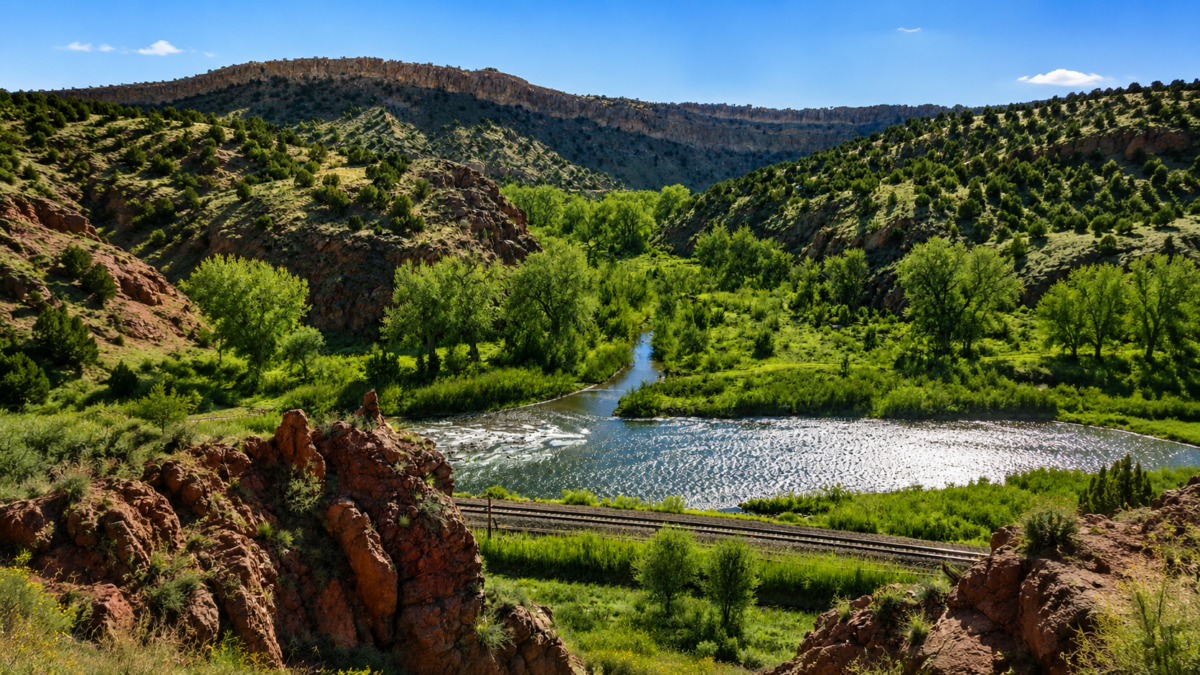
A few miles south of town, Grape Creek cuts through a surprisingly wild landscape of rocky walls, pinyon-juniper country, cottonwoods, trout water, primitive campsites, and quiet public land. At the lower end of the canyon, the City of Cañon City protects 600 acres as Temple Canyon Park.
It feels far removed from town even though Cañon City is only a short drive away.
Late summer and fall are especially good times to put Temple Canyon on your Arkansas River itinerary. The lower elevation can stay pleasant after colder weather starts creeping into Leadville and the Upper Arkansas Valley, Grape Creek offers fishing opportunities, and the cottonwoods along the creek eventually bring a splash of fall color to the otherwise dry canyon landscape.
If your Arkansas River trip normally ends at the Royal Gorge, keep going. This is a side trip worth knowing about.
First, Where Is Temple Canyon?
Temple Canyon Park is southwest of Cañon City along Grape Creek, a tributary that eventually joins the Arkansas River just west of town.
The City of Cañon City manages the park as natural mountain open space. It includes Grape Creek access, primitive camping, picnic areas, restrooms, and a network of winding gravel roads.
The city lists the park as open from dawn to dusk for day use.
The important thing to understand is that this is not a polished urban park.
The road becomes gravel, the country gets rougher, and services are limited. That is a big part of the appeal.
Before heading out, check the City of Cañon City’s Temple Canyon Park information and download the park map.
Grape Creek Is the Real Star
Temple Canyon gets the name, but Grape Creek creates the experience.
The creek drains the Wet Mountain Valley before eventually reaching the Arkansas River near Cañon City. Below DeWeese Reservoir, it flows through increasingly rugged country on its way north.
Colorado Parks and Wildlife describes Grape Creek below the reservoir as an excellent fishery capable of supporting high densities and quality sizes of both brown and rainbow trout.
That alone makes the drainage interesting.
But the farther Grape Creek travels toward the Arkansas, the more isolated the landscape becomes. The creek cuts through steep, rocky terrain where green ribbons of streamside vegetation contrast sharply with the dry hillsides above.
The Bureau of Land Management manages extensive public lands farther upstream, including the Lower and Upper Grape Creek Wilderness Study Areas. BLM also identifies the Grape Creek riparian corridor as an Area of Critical Environmental Concern.
There are no developed trail systems through much of that backcountry.
Temple Canyon Park provides a much more approachable introduction to the drainage.
Hike Down to the Temple
The park’s namesake feature is a large natural rock alcove known as the Temple.
The hike drops from the surrounding uplands toward Grape Creek, where cottonwoods and streamside vegetation create a much greener environment than the slopes above.
Fremont Adventure Recreation describes the Temple route as roughly 1.6 miles with about 400 feet of elevation change. The descent includes steep switchbacks before reaching Grape Creek and continuing toward the rock alcove.
That means the easy-looking downhill beginning has to be climbed on the way back.
Bring water, wear shoes with decent traction, and remember that southern Colorado canyon country can remain hot even when temperatures farther up the Arkansas Valley have started feeling like fall.
The creek itself may also require care depending on where you explore and current water conditions.
This is not the place for flip-flops and an empty water bottle.
Fish Grape Creek
Grape Creek is also worth knowing if fishing is part of your Arkansas River trip.
Colorado Parks and Wildlife lists brown trout and rainbow trout as the common species below DeWeese Reservoir and specifically identifies Temple Canyon as one of the places where anglers can access the fishery.
The creek is much smaller than the Arkansas.
That changes the experience completely.
Instead of reading a broad river with large runs and riffles, you are working through smaller pools, pocket water, bends, undercut banks, and canyon structure.
It can be a fun change of pace after spending a day on the Arkansas.
As always, check current Colorado fishing regulations before heading out. A valid Colorado fishing license is required for anglers who fall under the state’s licensing requirements.
Use the Colorado Parks and Wildlife Grape Creek page as a starting point.
Be Careful About Where You Access the Creek
This part matters.
Grape Creek passes through several different types of land on its way toward Cañon City, including BLM land, Colorado State Trust Land, and Cañon City property.
The rules are not identical everywhere.
In particular, Colorado State Trust Land is not the same thing as ordinary public land. CPW manages recreational access to the Grape Creek State Trust Land primarily for hunting and fishing, and people age 16 and older need a valid hunting or fishing license to access that property.
CPW currently lists the Grape Creek State Trust Land as open year-round for fishing as posted, with separate seasonal hunting access.
Do not assume that every dirt road, trail, or creek bank is open simply because you are near public land.
Check maps before your trip and pay attention to signs on the ground.
The CPW Grape Creek State Trust Land page explains the current access requirements.
Camp in Temple Canyon
Temple Canyon also offers something increasingly valuable near popular Colorado destinations: simple camping without a resort attached to it.
Cañon City lists primitive camping within Temple Canyon Park. The camping areas have vault toilets and fire rings, but there is no water.
Bring everything you need and plan to pack everything back out.
The city’s current campground information lists Temple Canyon camping as free and open year-round.
That does not mean conditions are always ideal.
The access roads are winding and narrow, and weather can change road conditions. Fire restrictions can also change quickly in Fremont County and across southern Colorado.
Check current conditions and restrictions before building a fire, even if a campsite has an existing fire ring.
If you are planning a larger trip, compare this area with other options in our Arkansas River camping guide.
Why Fall Works So Well Here
The Arkansas River corridor changes dramatically in elevation between Leadville and Cañon City.
That becomes especially useful in September and October.
When nights around Leadville and Twin Lakes begin turning cold and snow starts dusting the highest peaks, Cañon City’s lower-elevation canyon country can still be comfortable for hiking, fishing, biking, and camping.
Temple Canyon also has cottonwoods along Grape Creek.
When they turn, ribbons of yellow and gold run through a landscape dominated by reddish and brown rock, pinyon, juniper, and dry grass.
It is a completely different fall experience from driving through huge aspen stands in the high country.
And because lower elevations generally change later, Temple Canyon can be a good place to keep looking for fall color after some of the highest country has already passed peak.
There is no dependable annual peak date, so treat fall color as a bonus rather than scheduling an entire trip around a prediction made weeks in advance.
Look for Wildlife Too
Grape Creek is not just trout water.
The drainage provides habitat for a wide range of wildlife.
Colorado Parks and Wildlife lists hunting opportunities on the Grape Creek State Trust Land for species including bighorn sheep, deer, elk, bear, mountain lion, turkey, and rabbit.
That does not mean you should expect to see all of them on an afternoon hike.
It does mean this is real wildlife habitat.
Keep binoculars handy, give animals plenty of room, and be especially aware that fall overlaps with hunting seasons on some surrounding lands.
Wearing something visible is a simple precaution when hiking in areas where hunting is allowed.
Temple Canyon Is Also Part of a Bigger Trail Network
One reason this area deserves more attention is that Temple Canyon does not exist in isolation.
The hills south of Cañon City have become a significant hiking and mountain biking area, with routes connecting the Ecology Park area and surrounding trail systems.
That makes it possible to build a day around more than one activity.
Hike in the morning, explore Grape Creek, have lunch in Cañon City, then ride or walk another trail later in the day.
Or skip the ambitious itinerary entirely and spend a few hours beside the creek.
Both approaches work.
Pair Temple Canyon With the Arkansas River
Grape Creek ultimately flows into the Arkansas just west of Cañon City, which makes Temple Canyon a natural side trip rather than a separate destination.
If you are coming downstream from Salida, follow Highway 50 through Bighorn Sheep Canyon and the Royal Gorge region before spending time around Cañon City.
The change in scenery over that drive is remarkable.
Salida sits in a broad mountain valley. Bighorn Sheep Canyon squeezes the highway and river between steep rocky slopes. The Royal Gorge cuts dramatically through hard rock, and then the landscape begins opening as the Arkansas approaches Cañon City.
Grape Creek adds another variation.
It is smaller, quieter, and more intimate than the Arkansas.
If you are exploring the lower river for several days, use our Cañon City guide and Royal Gorge guide to build out the rest of the trip.
A Simple Temple Canyon Day
Morning: Explore Grape Creek
Leave Cañon City in the morning while temperatures are still comfortable.
Drive into Temple Canyon Park, stop at overlooks where it is safe to do so, and hike toward Grape Creek and the Temple.
Midday: Picnic or Fish
Bring lunch and spend some time along the creek.
If you plan to fish, make sure you have the appropriate Colorado fishing license and know which property you are on.
Afternoon: Return to Cañon City
Head back toward town and spend the afternoon along the Arkansas River, explore local trails, or continue toward the Royal Gorge.
If you still want more time outside, the Arkansas Riverwalk offers a much gentler contrast to the rough terrain of Temple Canyon.
Evening: Stay Low or Head Back Upstream
If you are camping in Temple Canyon, settle in before dark.
If your basecamp is farther upstream, follow Highway 50 back through Bighorn Sheep Canyon toward Salida.
Keep an eye on the canyon walls on the return drive. This is bighorn sheep country.
What to Bring
- Plenty of drinking water because Temple Canyon camping areas do not provide water
- Good walking or hiking shoes
- Sun protection
- Layers for changing temperatures
- Binoculars for wildlife
- Offline maps
- Fishing gear and a valid license if you plan to fish
- Food and everything you need for primitive camping if staying overnight
Do not count on cell service to solve every navigation problem.
Download maps before leaving town.
Frequently Asked Questions
Where is Temple Canyon Park?
Temple Canyon Park is southwest of Cañon City along Grape Creek. The City of Cañon City manages the 600-acre natural mountain park and provides a map and current facility information online.
Is Temple Canyon Park free?
As of August 31, 2026, Cañon City’s campground information lists camping at Temple Canyon Park as free. The park itself is municipal open space. Check the city’s current information before your trip in case policies change.
Can you camp at Temple Canyon?
Yes. Cañon City currently provides primitive camping at Temple Canyon Park. Facilities are basic, with vault toilets and fire rings at camping areas but no water.
Can you fish Grape Creek?
Yes. Colorado Parks and Wildlife describes Grape Creek below DeWeese Reservoir as an excellent brown and rainbow trout fishery and identifies Temple Canyon as an access area. Check current fishing regulations and land-access requirements before fishing.
Do I need a fishing license just to hike along Grape Creek?
It depends on where you are. Temple Canyon Park is city property, but portions of Grape Creek also cross Colorado State Trust Land. People age 16 and older need a valid hunting or fishing license to access the Grape Creek State Trust Land. Know which property you are entering rather than assuming the entire drainage has the same rules.
Is the road paved?
No. Cañon City describes the park as having winding, narrow gravel roads. Conditions can vary with weather, so drive accordingly and check local information before heading in after storms.
There Is More Than One Canyon Around Cañon City
The Royal Gorge is supposed to be dramatic.
Temple Canyon sneaks up on you.
You leave Cañon City, follow a gravel road into increasingly rugged country, and eventually find a green creek winding beneath canyon walls in a landscape that feels much farther from town than it actually is.
There is no giant visitor center waiting at the end.
No single overlook you have to photograph.
No reason to rush through it.
There is just a canyon, a trout stream, public land, a trail to a strange rock alcove, primitive campsites, and another piece of the landscape connected to the Arkansas River.
That is exactly why it is worth going.
Explore the Lower Arkansas River
Temple Canyon is only one side trip in the lower Arkansas River corridor. Use Arkansas River Guide to explore Bighorn Sheep Canyon, the Royal Gorge, Cañon City, fishing, camping, hiking, scenic drives, and the river from the high country near Leadville all the way into Colorado’s lower canyon country.